

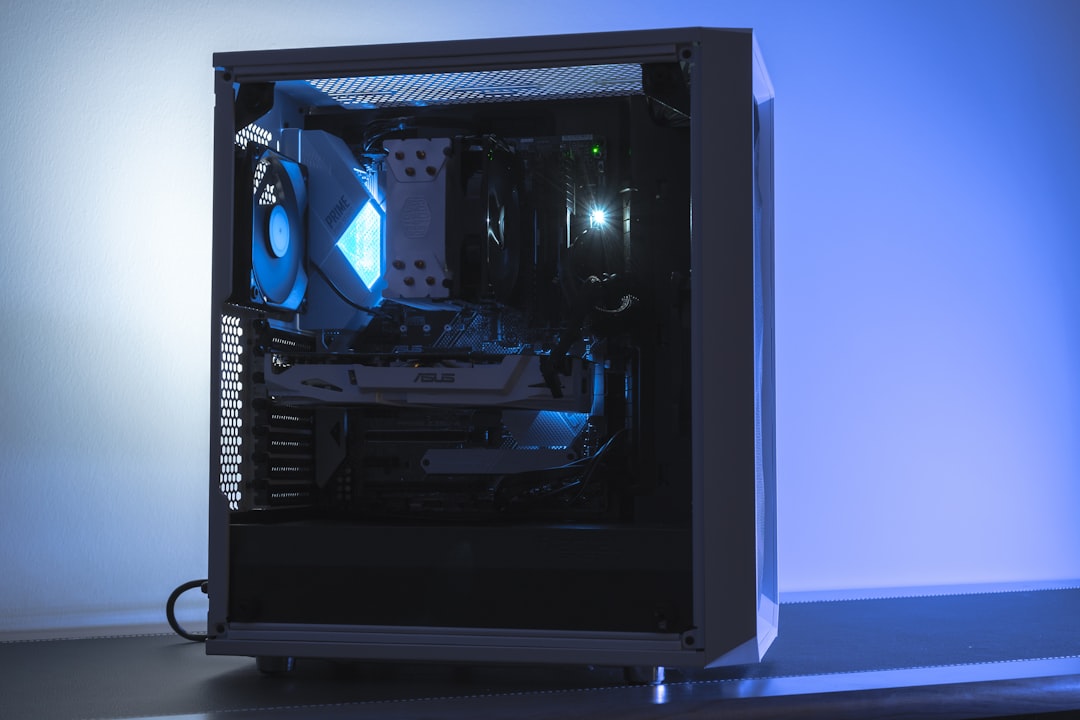
Your Guide to Building the Ultimate Gaming Rig
Understanding gaming pc requirements is key to achieving smooth, lag-free performance. Knowing what components work together is the difference between a frustrating experience and an immersive one.
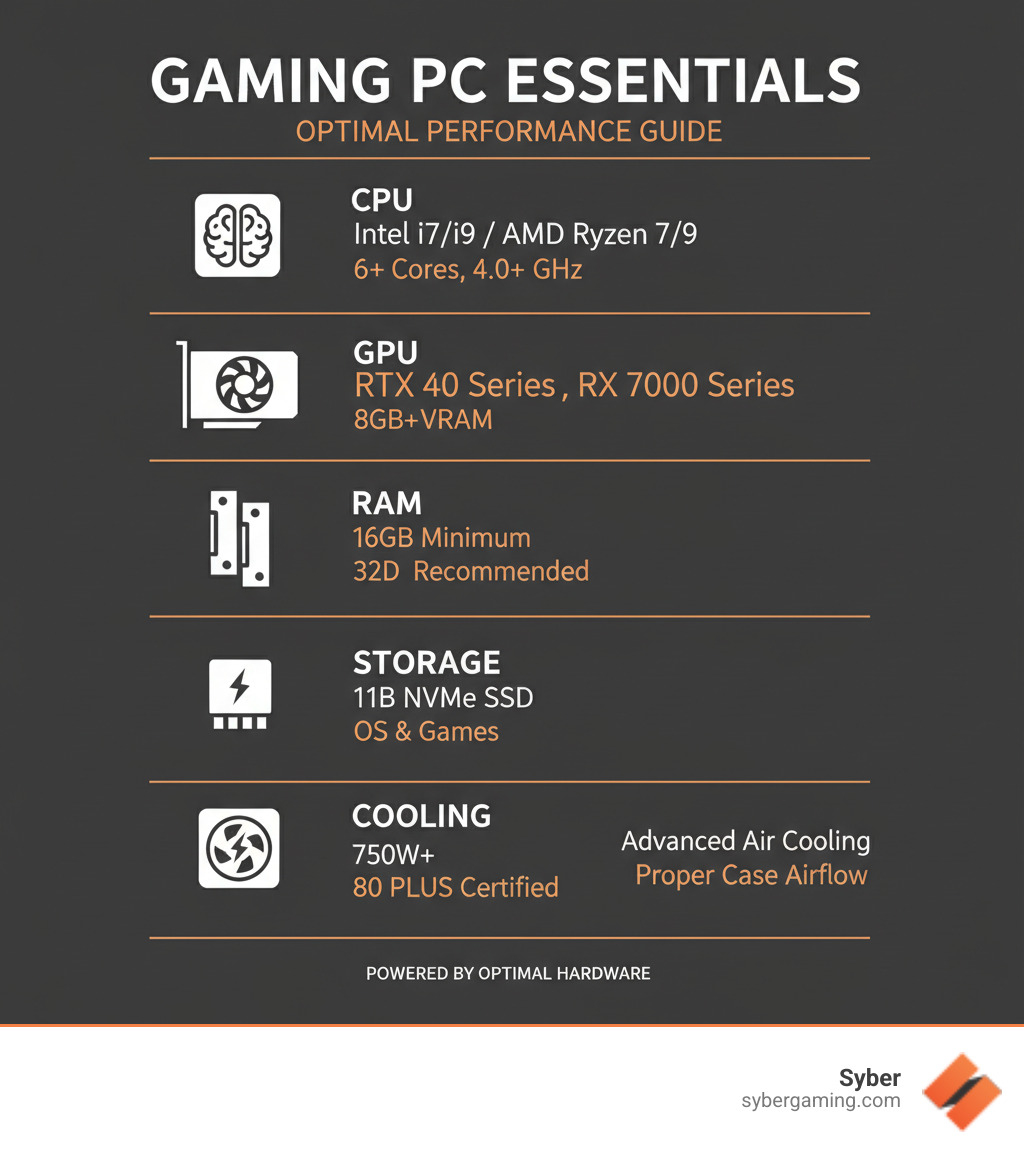
Essential Gaming PC Requirements:
- CPU: Intel i7/i9 or AMD Ryzen 7/9 with 6+ cores and 4.0+ GHz
- GPU: NVIDIA RTX 40 series or AMD RX 7000 series with 8GB+ VRAM
- RAM: 16GB minimum, 32GB recommended
- Storage: 1TB NVMe SSD
- PSU: 750W+ with 80 PLUS certification
- Cooling: Advanced air cooling with proper case airflow
- Monitor: 144Hz+ refresh rate with 1ms response time
Modern games demand more than standard PCs can offer, requiring dedicated graphics, fast processors, and ample memory for a smooth 60+ FPS experience. A high performance gaming pc isn't just about raw power; it's about components working in harmony.
AI-powered gaming is also reshaping expectations. Technologies like NVIDIA's DLSS and AMD's FSR use AI to boost frame rates while maintaining visual quality, making AI compatibility a new gaming pc requirement.
Whether you're considering a custom build gaming pc or a pre built gaming computer, understanding these core requirements helps you build a balanced system where no single component becomes a bottleneck.
Core Components: Understanding High Performance Gaming PC Requirements
Building a gaming pc requires understanding how each component works together. Whether you're considering a custom build gaming pc or exploring pre built gaming computers, knowing these essentials helps you make smart choices.
The Brains: CPU and Motherboard Compatibility
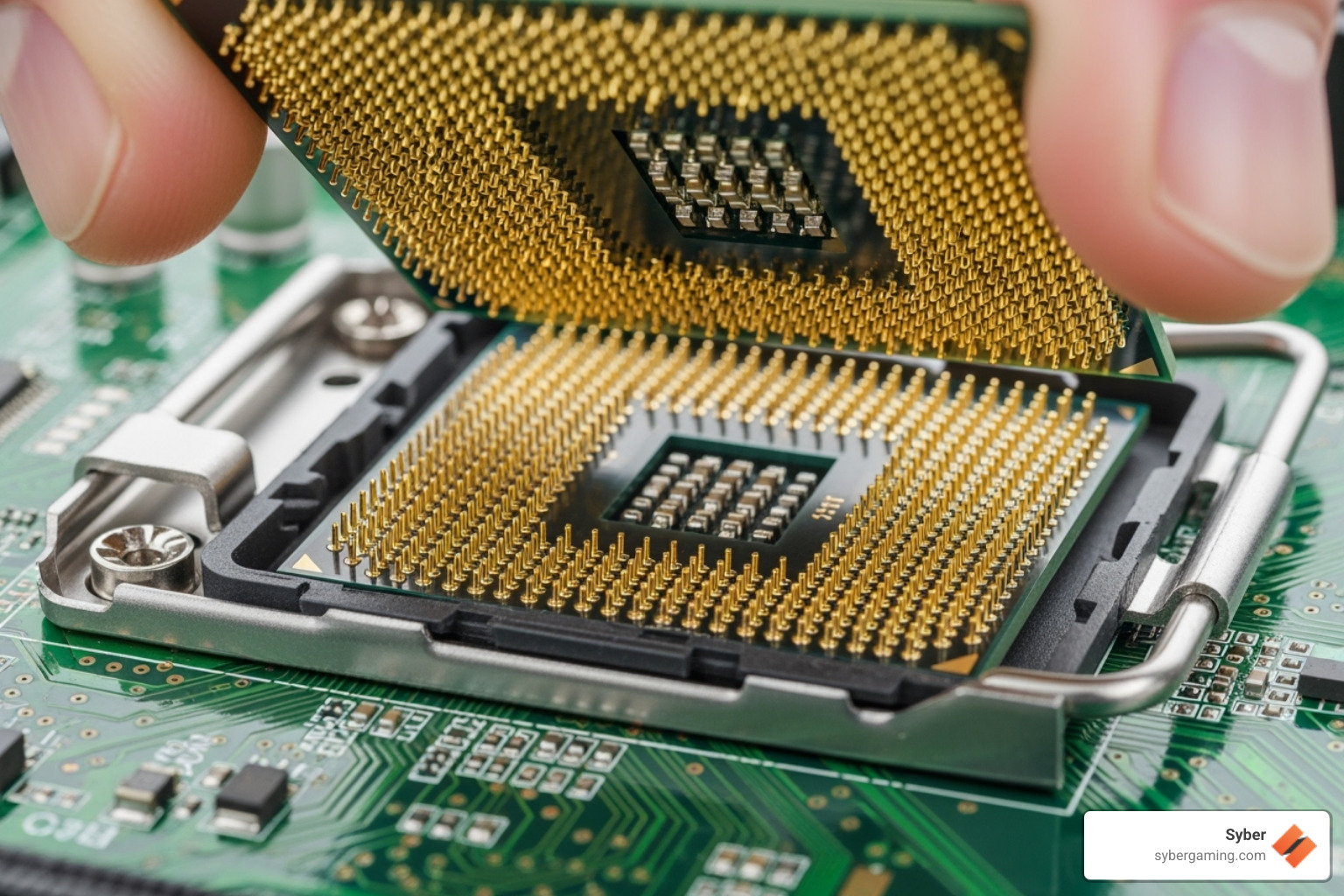
Your CPU, or Central Processing Unit, is the brain of your rig. For a high performance gaming pc build, aim for a processor with at least six cores and a high clock speed, ideally 4.0 GHz or higher. Clock speed measures how many cycles a CPU can execute per second, so a higher number generally means faster processing for game logic and AI calculations. While more cores are beneficial for heavy multitasking like streaming your gameplay, most current games perform best with fewer, faster cores. Top choices include Intel's Core i7/i9 and AMD's Ryzen 7/9 series, which offer a great balance of core count and speed.
The motherboard is the central hub connecting all your components. Key considerations are:
- Socket Compatibility: Ensure your motherboard's socket matches your CPU (e.g., Intel LGA vs. AMD AM5).
- Form Factor: This determines the board's size. ATX is standard, offering plenty of expansion. Micro-ATX is a good middle ground, while Mini-ITX is for compact builds.
- Chipset: Newer chipsets on motherboards support the latest technologies like DDR5 memory and PCIe 5.0. PCIe 5.0, for example, doubles the bandwidth of the previous generation, allowing next-generation GPUs and SSDs to communicate with the CPU at incredible speeds. Choosing a modern chipset is a key part of future-proofing your build. Use tools like the Intel® Desktop Compatibility Tool to verify compatibility.
Syber's A Redesign to an Elite Machine: Syber M Series showcases how proper CPU and motherboard pairing creates a foundation for exceptional performance.
The Powerhouse: GPU, Resolution, and AI-Improved Gaming
The graphics card (GPU) is the powerhouse that renders the stunning visuals you see on screen. Its dedicated video memory, or VRAM, is crucial for storing high-resolution textures and other graphical assets. For modern gaming at 1080p, 8GB of VRAM is the minimum. However, aiming for 12GB or more is highly recommended, especially if you plan to play at 1440p or 4K resolutions or want to be ready for future titles with even more detailed graphics.
Your target resolution dictates your GPU needs:
- 1080p: NVIDIA RTX 4060 or AMD RX 7600 series.
- 1440p: NVIDIA RTX 4070 or AMD RX 7700 XT and above.
- 4K: NVIDIA RTX 4080/4090 or AMD RX 7900 series.
For competitive gaming, a monitor with a 144Hz refresh rate or higher is essential for smooth motion. AI-powered gaming features are also changing performance. Ray tracing delivers realistic lighting by simulating the physical behavior of light. AI upscaling technologies like NVIDIA DLSS (Deep Learning Super Sampling) and AMD FSR (FidelityFX Super Resolution) are game-changers. They boost frame rates by rendering the game at a lower internal resolution and then using sophisticated AI algorithms to upscale the image to your monitor's native resolution. The result is a significant performance uplift with minimal to no perceptible loss in visual quality, allowing you to enjoy higher frame rates or enable more demanding settings like ray tracing. An AI gaming PC leverages these technologies for a superior experience.
See what a powerful GPU can do by checking out how to Experience Halo Infinite on a Syber Gaming PC.
The Engine: RAM and SSD Storage Solutions
RAM (Random Access Memory) is your PC's short-term memory, holding data that your CPU needs to access quickly. 16GB is the baseline for modern gaming, but 32GB is the sweet spot for heavy multitasking, streaming, and future-proofing. DDR5 memory is the new standard, offering significantly higher data transfer speeds and better power efficiency compared to its predecessor, DDR4. When installing RAM, always use two identical sticks to enable dual-channel mode. This allows the CPU to access both memory modules simultaneously, effectively doubling the memory bandwidth and preventing a major performance bottleneck that occurs when using only a single stick.
Fast storage is no longer a luxury; it's a necessity. An NVMe SSD (Non-Volatile Memory Express Solid-State Drive) connects directly to the motherboard's PCIe lanes, enabling speeds that are many times faster than older SATA-based SSDs and traditional hard disk drives (HDDs). This translates to dramatically reduced game loading times, faster asset streaming in open-world games, and a more responsive operating system. A 1TB NVMe SSD is a great starting point for your operating system and favorite games. Learn more at Grow & Buy Gaming PC.
Staying Cool and Powered: Airflow and PSU Essentials
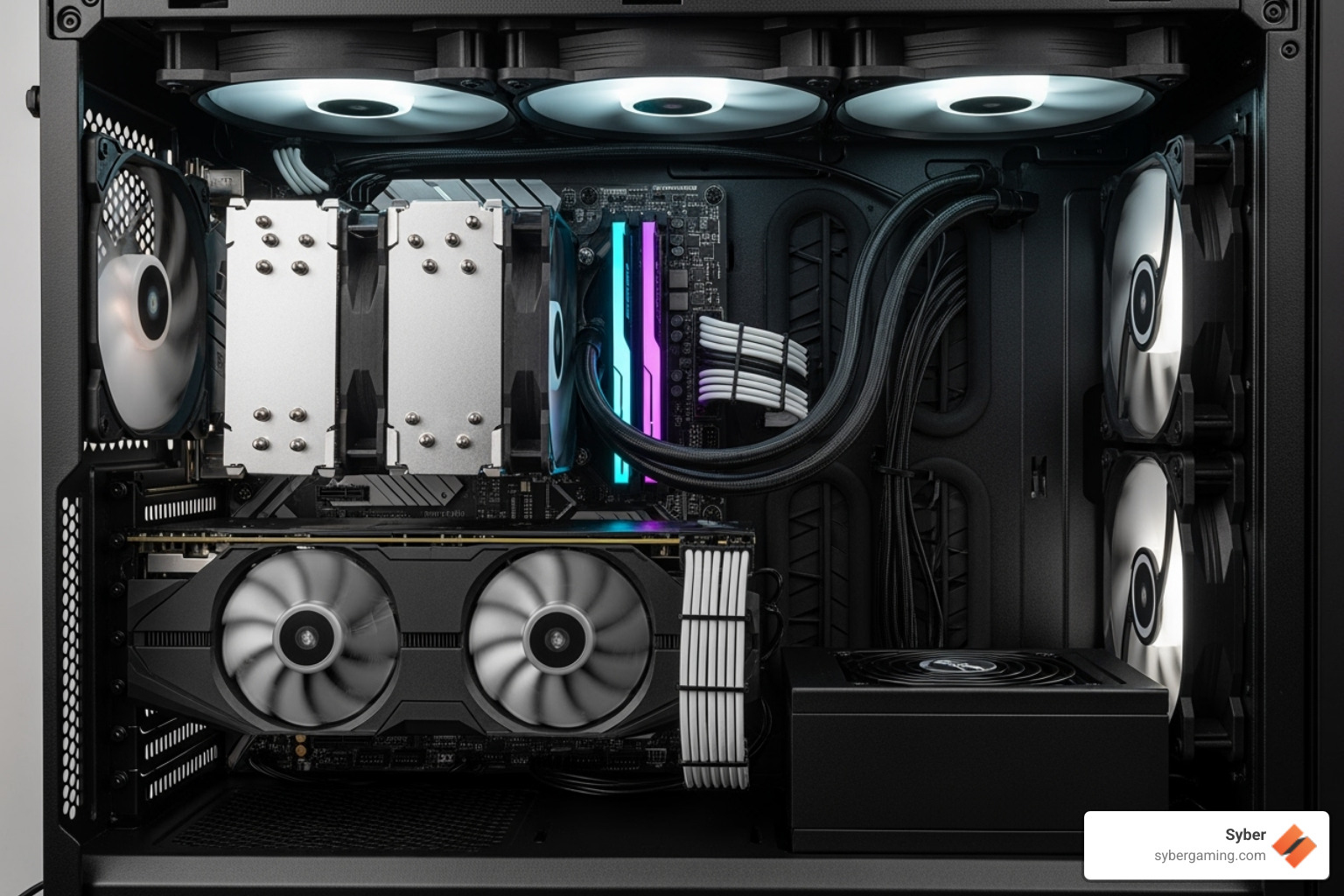
High-performance components generate significant heat, and managing it is critical. If a CPU or GPU gets too hot, it will automatically reduce its speed to prevent damage—a process known as thermal throttling. This directly lowers your in-game frame rates and can cause stuttering. Advanced air cooling with high-quality fans and heatsinks is a reliable and effective way to keep temperatures in check. A case with good ventilation and a smart fan setup (intake fans pulling cool air in from the front/bottom, exhaust fans pushing hot air out the back/top) is crucial for maintaining optimal airflow patterns. Good cable management also helps by removing obstructions to airflow.
The power supply unit (PSU) is the heart of your system, delivering electricity to every component. A weak or failing PSU can cause system instability, random crashes, or even damage your hardware. A 750W or higher PSU is recommended for most high-end systems to provide ample power for the CPU and GPU, especially during peak loads. Look for a unit with at least an 80 PLUS Gold certification. This rating indicates high power efficiency, meaning less electricity is wasted as heat. A more efficient PSU runs cooler, quieter, and can help lower your energy bill. Modular PSUs, which let you connect only the cables you need, are excellent for reducing clutter and improving airflow inside the case. Use a PSU Wattage Calculator to find your needs, and add 20% headroom for stability.
The Syber XL Series demonstrates how proper power and cooling solutions maintain consistent performance.
Pre-Built vs. Custom: Choosing Your High Performance Gaming PC
Pre built gaming computers offer unmatched convenience. They arrive ready to go, professionally assembled and tested, and are covered by a single, comprehensive warranty. This is the perfect option for gamers who want to jump straight into the action without the time investment and technical challenges of building, and who value the peace of mind that comes with dedicated customer support.
A custom build gaming pc offers the ultimate in personalization. You have complete control over every single component, from the processor to the case fans, allowing you to tailor the system precisely to your needs, budget, and aesthetic preferences. The building process itself can be a rewarding learning experience. However, it requires significant research to ensure component compatibility, as well as the time and technical skill to assemble it correctly.
When deciding, consider future-proofing. Choose a platform with upgrade potential, like a motherboard with extra slots for more RAM or storage and a PSU with enough spare wattage to handle a more powerful GPU down the line. As AI-powered gaming continues to evolve, having an AI-ready gaming PC with a modern GPU ensures you're prepared for the next wave of gaming technologies.
Syber specializes in high performance custom prebuilt gaming pc systems, offering the best of both worlds: expert assembly and testing with the customization you crave. Learn more at What to Consider When Buying a Gaming PC and explore Syber Machine Value & Performance.
The Complete Setup: Peripherals and Budgeting for your gaming pc requirements
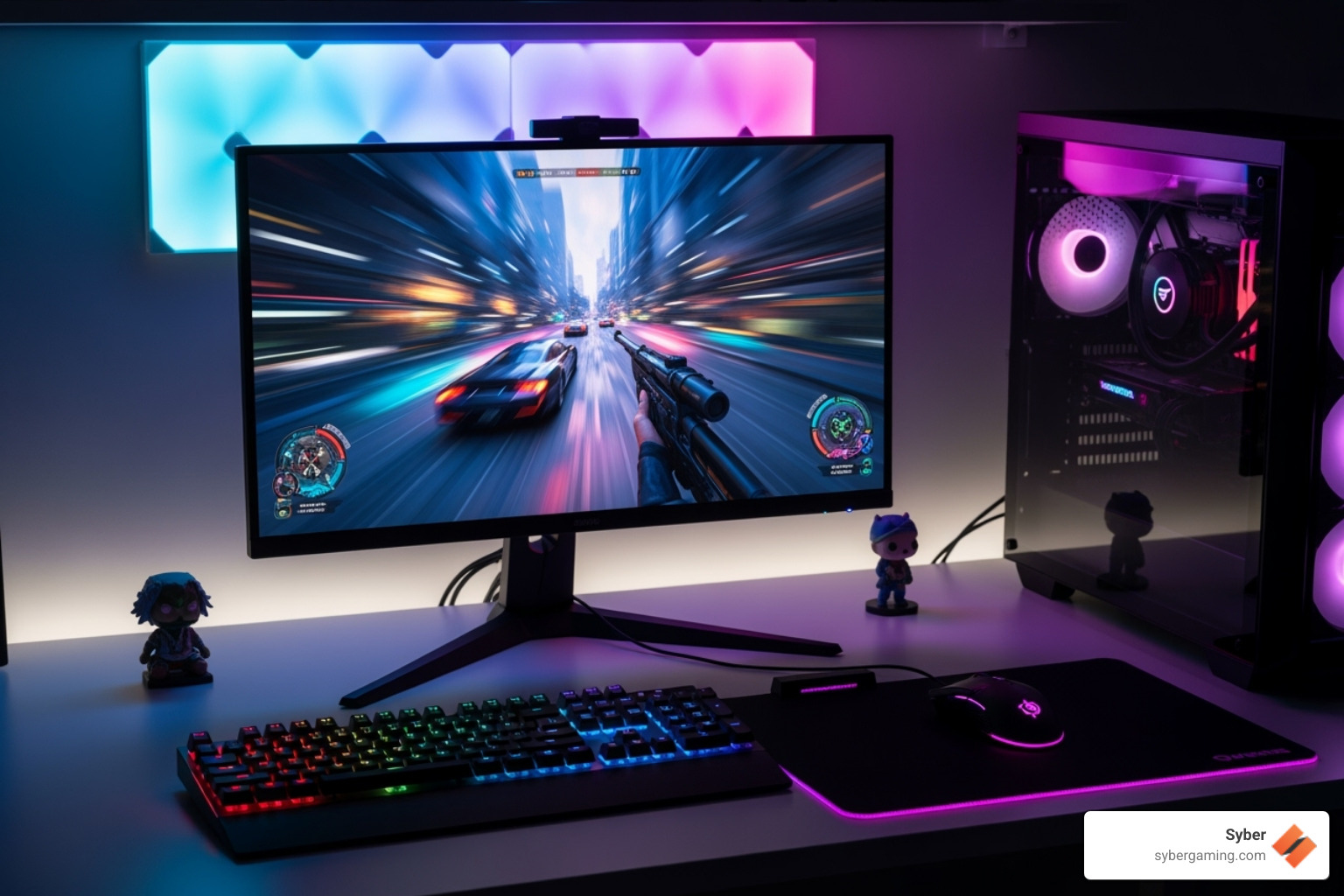
Your PC is only part of the equation. Quality peripherals are essential for a great gaming experience and translating your skills into the game.
- Monitor: A 144Hz refresh rate is the minimum for smooth, fluid gameplay, with a 1ms response time to eliminate motion blur and ghosting. Adaptive sync technology (NVIDIA G-SYNC or AMD FreeSync) is also crucial, as it synchronizes the monitor's refresh rate with the GPU's frame output to prevent screen tearing.
- Keyboard & Mouse: A mechanical keyboard provides superior tactile feedback, durability, and precision compared to standard membrane keyboards. A gaming mouse with a high polling rate (1000Hz or more) and an adjustable DPI sensor ensures your movements are registered instantly and accurately, which is critical in fast-paced games.
- Audio: A quality headset with clear audio and a good microphone is a must. Positional audio, often delivered through virtual 7.1 surround sound, provides a competitive edge by helping you pinpoint the direction and distance of enemy footsteps and other crucial sound cues.
When budget planning, it's helpful to think in tiers: entry-level systems for casual play and older titles, serious builds for competitive 1080p/1440p gaming at high frame rates, and pro-grade systems for 4K gaming and demanding tasks like content creation. Always allocate a portion of your budget for good peripherals, as they are your direct interface with the game. The Syber M1 Gaming Mouse Expanded Launch shows how the right gear improves your game.
Bringing It All Together: Your Next Steps
Building or buying a gaming PC is about creating a balanced high performance gaming pc build where every part works in harmony. Understanding gaming pc requirements allows you to make informed decisions, whether you're planning a custom build gaming pc or looking at pre built gaming computers.
For those who want guaranteed performance without the hassle of building, a pre built gaming pc customizable by experts is the ideal solution. That's where Syber shines. Every high performance custom prebuilt gaming pc we build undergoes rigorous testing to ensure it's perfectly tuned for any gaming scenario.
The future is here with AI-powered gaming. An AI-ready gaming PC ensures you can leverage technologies like DLSS and FSR for the best performance and visuals. Investing in a well-built system means more time gaming and less time troubleshooting.
Ready to level up your gaming experience with a system that's been tested, tuned, and optimized for peak performance? Explore Syber's elite Syber M Series and find what a truly high performance gaming pc can do for your gameplay.


.svg)

